
When you look at a tall skyscraper or a cozy home, it is easy to focus on the walls and the roof.
However, the most important part of any building is actually the part you cannot see the
foundation. Before a single brick is laid, a massive amount of work goes into preparing the
ground. This process is called excavation. If you are wondering how to excavate a construction
site properly, it is much more than just digging a hole in the ground. It is a careful mix of science,
engineering, and heavy machinery.
In 2026, excavation has become safer and more precise than ever before. This guide, brought
to you by Syed brothers, will walk you through the entire journey of turning a piece of raw land
into a construction-ready site, explaining everything in simple terms.
Understanding What Excavation Actually Is
At its simplest level, excavation is the process of moving earth, rock, or other materials with tools, equipment, or explosives. It includes earthwork, trenching, wall shafts, tunneling, and underground work. It is the very first step in construction where the plan on paper starts to become a reality on the ground.
The goal isn't just to remove dirt; it is to create a steady and level base for the building's foundation. If the excavation is done poorly, the building could sink, crack, or even collapse later on. This is why construction teams take this stage very seriously
Step 1: Site Assessment and Preparation
Long before the bulldozers arrive, the work begins with careful planning. You cannot simply start digging anywhere you want. The first step is clearing the land. This involves removing any obstacles that might get in the way, such as trees, boulders, logs, or the remains of old buildings. This gives the crew a "clean slate" to work on.
Once the surface is clear, the team must look at what is underneath. This is done through soil testing. Engineers drill deep into the ground to see how strong the soil is and whether it can support the weight of a building. They also check for groundwater levels. If the soil is too loose or too wet, they might need to replace it or treat it to make it stronger.
Perhaps the most critical part of preparation is locating underground utilities. The ground is often full of hidden wires, gas pipes, and water lines. Digging blindly into these can be dangerous and expensive. Surveyors use special maps and technology to mark exactly where these hazards are so the excavators can avoid them.
Step 2: Setting Out and Surveying
Once the land is clear and the soil is tested, the team moves to "setting out." This is where the plans from the architect are transferred to the actual ground. A surveyor uses special equipment to mark the corners of the building and the depth of the foundation. They usually place corner stakes, known as benchmarks, to guide the workers.
These markers act as a map for the machine operators. They tell the crew exactly where to dig and, more importantly, how deep to go. If they dig too shallow, the foundation won't be stable. If they dig too deep, they waste time and money filling it back up.
Step 3: The Excavation Process
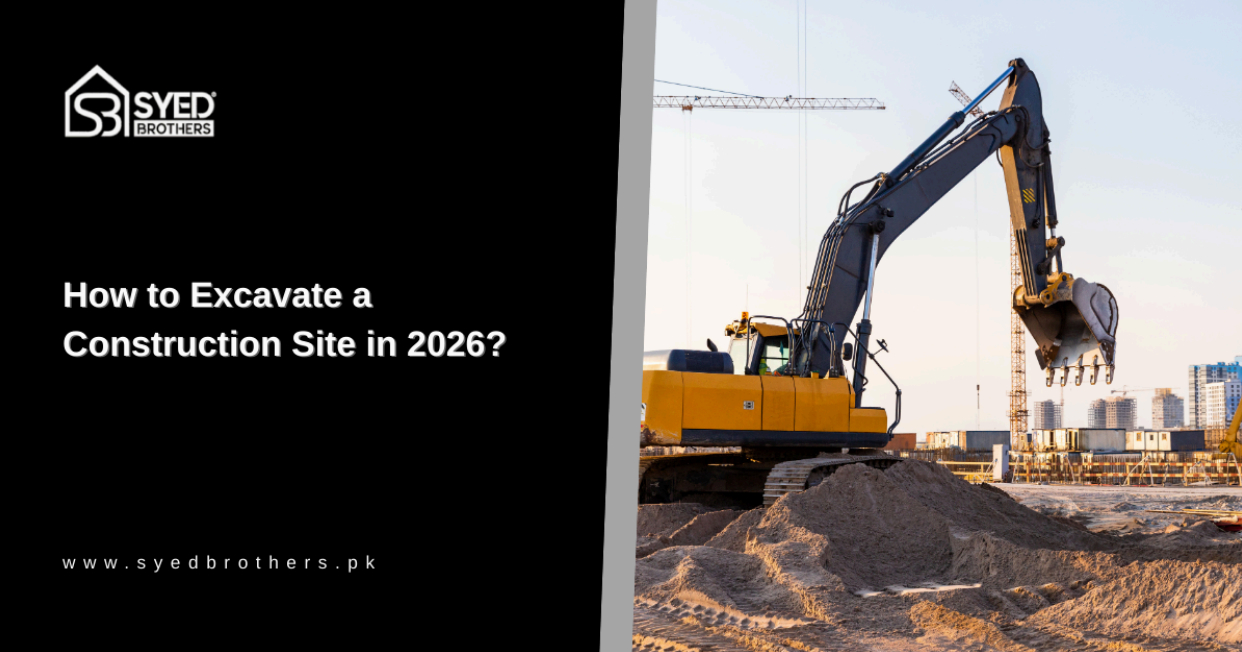
Now the heavy lifting begins. Depending on the size of the project, the crew will bring in excavators, bulldozers, backhoes, and dump trucks. There are a few different ways they might move the earth.
One common method is called "cut and fill." This is used when the land isn't flat. The workers cut earth from the high spots (hills) and use that dirt to fill in the low spots (valleys). The goal is to make the ground perfectly level.
Sometimes, the job requires digging deep trenches for the foundation footings or for pipes. This requires precision. The operator has to be very skilled to dig a straight, clean line. As they dig, dump trucks act like a conveyor belt, hauling away the extra dirt that isn't needed on the site.
Step 4: Handling Different Types of Materials
Not all digging is the same because not all ground is the same. Excavation is often categorized by the material being moved.
Topsoil excavation creates the first layer. This removes the very top layer of earth where grass and plants grow. This soil is compressible and bad for building on, so it is removed and often saved to be put back later for landscaping
Earth excavation removes the layer of soil right below the topsoil. This is usually what we think of as "dirt."
Rock excavation is much harder. When the ground is too rocky for normal machines, the crew might need drills or even controlled blasting to break the rock into pieces small enough to move.
Muck excavation happens when the ground is wet and marshy. This wet dirt, or "muck," is terrible for supporting weight, so it is usually scooped out and spread out somewhere else to dry.
Step 5: Dealing with Water and Safety
Water is the enemy of a good foundation. If it rains or if the digging hits the water table, the hole can fill up with water and mud. This makes it impossible to pour concrete. To fix this, builders use a process called dewatering. They install pumps to suck the water out and keep the hole dry while they work.
Safety is also a huge concern. A deep hole can be dangerous because the walls can cave in. To prevent this, construction teams use "shoring." This involves putting up wooden or metal supports against the walls of the trench to hold the dirt back. It keeps the workers safe inside the hole.
Modern Techniques: Vacuum Excavation
In 2026, one of the most valuable techniques being used is vacuum excavation, sometimes called suction excavation. Instead of using a metal bucket to scoop dirt, this method uses a high-powered air vacuum to suck the soil up.
This is incredibly useful when working around those delicate underground pipes and wires we mentioned earlier. A metal shovel can easily crack a pipe, but the vacuum simply sucks the dirt away from around the pipe without touching it. It is safer, cleaner, and causes much less damage to the surrounding area.
Finalizing the Site
Once the hole is dug to the perfect depth and the ground is leveled, the excavation creates a solid surface for the foundation. The crew will often perform a final check of the boundaries and the soil density. Only when the excavated site is approved by the engineers can the next team come in to pour the concrete.
Learning how to excavate a construction site reveals that it is a complex process requiring careful planning and execution. It is the heavy, messy, and loud work that makes the beautiful, stable structures of our world possible.