
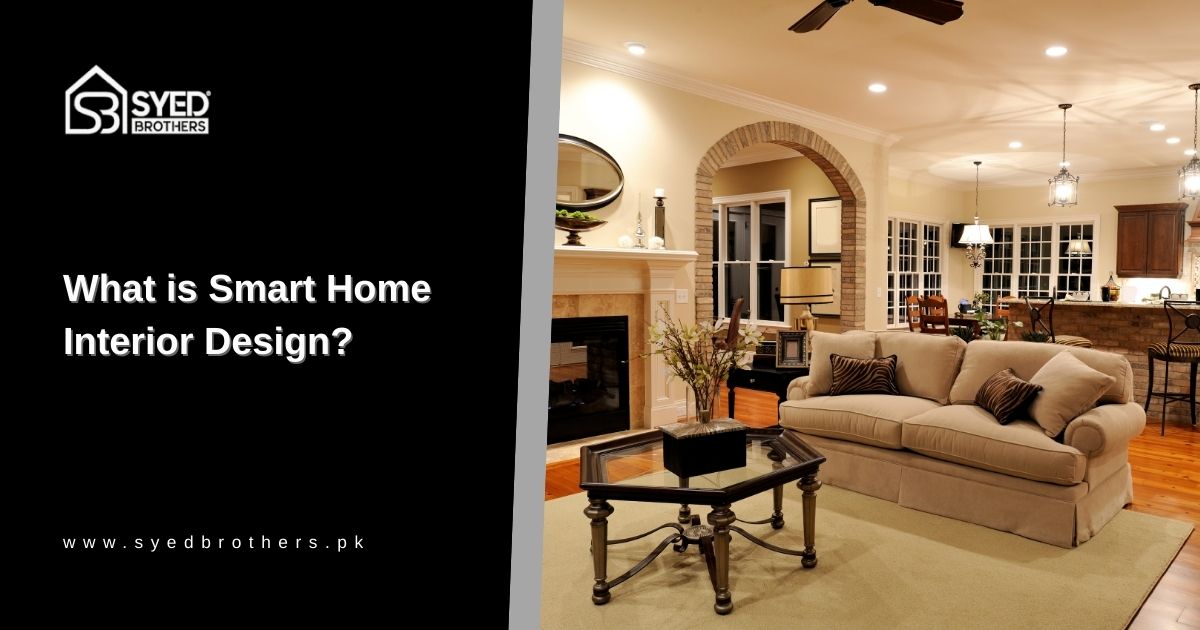
Walk into a home in 2026 and you might notice the lights gently changing as the sun sets, the temperature staying perfectly comfortable, and soft music starting in the background – all without anyone pressing a switch. That whole experience is the answer to what is smart home interior design: it’s interior design plus technology, working together to make life easier, safer, and more beautiful.
This guide combines the key ideas from leading smart-home and interior design blogs and updates them for 2026, so you get a simple, complete picture in one place.
What is Smart Home Interior Design?
In simple words, smart home interior design means planning your home so that internet-connected devices are built into the space in a clean and thoughtful way. Instead of adding random gadgets later, you design rooms where lights, temperature, curtains, security, and entertainment are all connected and can be controlled automatically, by app, or by voice. These comprehensive solutions are often part of professional interior design services that specialize in modern, connected living spaces.
The goal isn’t to show off technology. Good smart interior designers focus on “invisible tech” – wires, sensors, and hubs are hidden inside walls, ceilings, and furniture so you mainly see a calm, well-designed room. You feel the comfort and convenience, but you don’t stare at ugly boxes and messy cables.
So when we ask what is smart home interior design, the best answer is: it’s a way of designing a home where technology quietly supports your lifestyle, instead of becoming visual clutter.
Why Smart Interior Design Matters in 2026
Life in 2026 is more "home-centric" than ever. Many people still work or study from home, use one room for several purposes, and care more about energy bills and the environment.
Smart home interior design helps with all of that:
-
It personalises your space. Lights, temperature and even sound can change based on time of day, who is at home, or what you’re doing – work, study, movie night, prayer, or sleep.
-
It saves energy. Smart thermostats, sensors, and blinds turn things off when they’re not needed and adjust to the weather, which cuts waste and bills.
-
It improves safety and security. Discreet cameras, smart locks, leak and smoke sensors can send alerts to your phone and help protect your home without making it look like a factory.
-
It supports ageing and accessibility. For older people or kids, voice control and automation make basic tasks – like turning lights on or opening curtains – much easier and safer.
Core Elements of a Smart Home Interior in 2026
- Smart Lighting That Follows Your Day
- Climate Control and Energy Management
- Discreet Security and Safety
- Connected Entertainment and Sound
- Smart Furniture, Curtains, and Storage
- A Central Hub and Open Ecosystem
Most homes start their smart journey with lighting. Modern systems don’t just turn on and off; they change brightness and colour through the day to match your body clock – cooler, brighter light in the morning to wake you up and warmer, softer light in the evening to help you relax and sleep better.
Motion sensors can gently light up hallways at night, and scenes like “Work”, “Dinner”, or “Movie” can adjust several lights at once.
A smart thermostat “learns” your routine and sets the temperature automatically. In many smart interiors, it is paired with motorised blinds and high-efficiency windows: when the sun is too strong, blinds close to keep rooms cool; on cold days, the home can keep warmth inside.
This is a big part of what smart home interior design means today – comfort plus serious energy savings.
Modern smart homes use small, almost invisible devices: slim door and window sensors, compact cameras hidden in shelves, smart locks on doors, and detectors for smoke, gas, or water leaks. The trick is to blend them into walls, ceilings, or furniture so your home still feels welcoming, not like a security office.
Ultra-thin TVs, in-wall speakers, and multi-room audio systems now double as design elements. Designers often hide speakers in ceilings or behind panels so you enjoy cinema-level sound without boxes everywhere. Entertainment systems are usually tied into the same app or voice assistant as your lights and curtains, so one command can start a full movie or gaming scene.
In 2026, smart home interiors increasingly include furniture and décor with built-in tech: coffee tables with wireless charging, sofas with hidden outlets, mirrors that show the weather and news, and motorised curtains that open and close on a schedule. These pieces save space and keep surfaces clean while adding everyday convenience.
All of this only feels “smart” if it’s easy to control. That’s why most experts recommend a central hub – this can be a smart speaker, wall panel, or app that connects everything together.
Designers also suggest using an open ecosystem (for example, Zigbee, Matter, or similar platforms), so you’re not locked into one brand and can keep adding new devices over the years.
Design Principles for a Beautiful Smart Home
When you break down what is smart home interior design from a designer’s point of view, four simple rules appear again and again in expert blogs.
First, seamless and subtle integration: Devices should match the colour and style of your rooms or be hidden completely. Smart switches, curtain tracks, routers, and hubs can sit inside cabinetry or behind panels so your room still looks calm and tidy.
Second, aesthetics plus function: Every tech item should do a real job and also fit the look of the room. For example, a sleek smart thermostat can become a design accent on the wall, and a light strip behind a headboard can be both mood lighting and a night light.
Third, intuitive control for everyone: A smart home fails if guests can’t even turn on the bathroom light. Good design keeps simple wall switches and clear labels, and then adds app and voice control on top. Routines like “Goodnight” or “Leaving Home” reduce many actions to one tap or phrase.
Fourth, scalability and future-proofing: Technology changes fast. Experts recommend starting with core systems (lighting, climate, security) and choosing devices that work with standard platforms so you can add more later without ripping your house apart.
Key Trends in Smart Home Interior Design for 2026
One big trend is biophilic design – connecting your interior with nature. Designers use big windows, indoor plants, and natural materials and then support them with smart watering, light sensors, and daylight-mimicking lighting to keep you feeling healthier and more relaxed.
Another is green, energy-efficient design. Homes now mix reclaimed materials, efficient appliances, and automation like smart thermostats, water-saving fittings, and intelligent lighting to reduce waste and support a low-carbon lifestyle.
Multifunctional spaces are also a must. One room might be a home office by day and a family room by night. Smart scenes change light levels, sound, and even furniture position to match each role, making small apartments feel flexible and spacious.
Finally, there is a strong focus on personal style plus smart living. Minimalist, Scandinavian, contemporary, and even traditional homes now use smart locks, voice-controlled lighting, and hidden speakers that match their chosen style instead of fighting it.
How to Start Designing Your Own Smart Home
If you’re just starting, you don’t need to buy everything at once. Here’s an easy path that fits most budgets.
Step 1: Decide what matters most.
Make a short list of your top problems: high energy bills, poor lighting, security worries, or lack of comfort. Pick one or two priorities; this helps you choose the right devices instead of random gadgets.
Step 2: Choose your control system
Pick a main platform (for example, a voice assistant plus a compatible app). Check that your future lights, switches, and sensors will all work with it. This is the “brain” of your smart home.
Step 3: Start with one room
Choose the room you use the most – often the living room or bedroom. Add smart lighting, a thermostat or AC controller if needed, and maybe smart curtains or a lock. Set up two or three simple scenes like “Work”, “Relax”, and “Sleep”.
Step 4: Grow slowly and keep it tidy
After a few weeks, you’ll see what really helps you. Then you can add security devices, audio, or more sensors in other rooms. Each time you expand, think like an interior designer: where will the wires go, how will the device look on the wall, and will a guest still understand how to use the room?
Final Thoughts
So, what is smart home interior design in 2026? It’s the art of making your home intelligent without making it complicated. It combines beautiful interior design with quiet, well-planned technology so your space can adapt to you – not the other way around.By focusing on invisible tech, intuitive control, energy-saving features, and rooms that easily change function, you can turn any house or apartment into a smart, stylish, and future-ready home.
Ready to Design Your Smart Home?
Turn your home into a beautifully connected space with Syed Brothers’ advanced interior design services.
From invisible tech to elegant finishes, we design homes made for modern living.
Call now: +92 321 4524254