
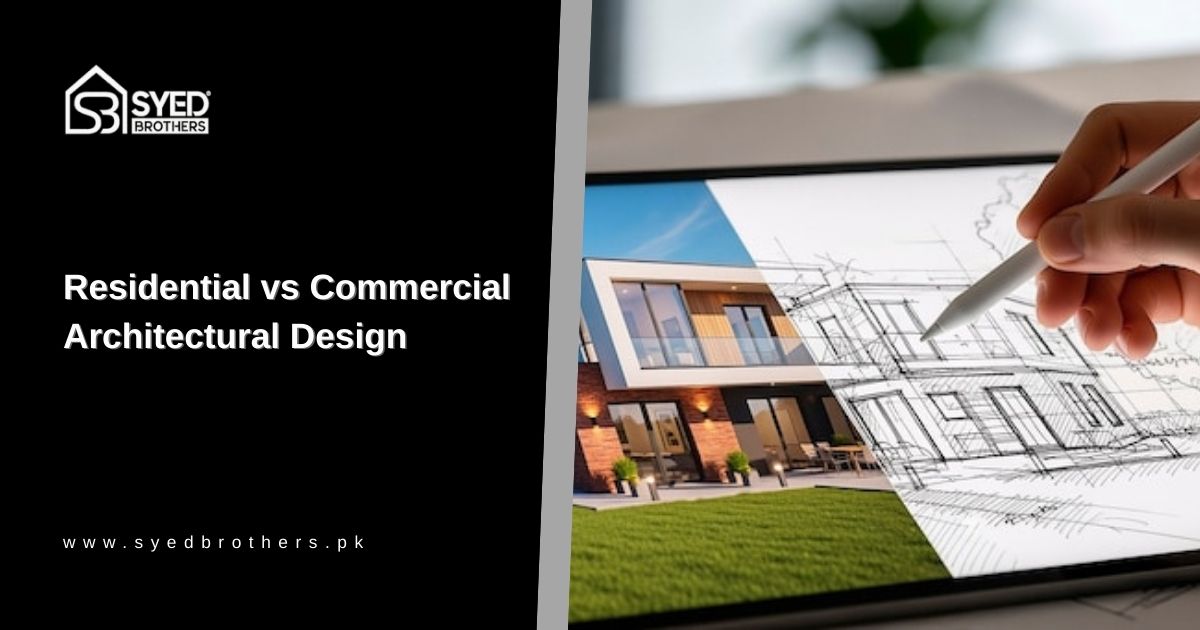
When you think about "architecture" what comes to mind? Is it the cozy feeling of your living room or vibe of a modern office building? No doubt both are structures but Residential vs Commercial Architectural Design process is very different for each.
Architectural design is more than just drawing walls and roofs. It is the art and science of creating spaces that work for the people. Choosing the right approach is important. A house needs to feel like a home. A business needs to function like a well-oiled machine.
The difference between residential and commercial architecture affects everything. It can impact how much you enjoy your morning coffee or how productive employees feel at work.
Core Purpose of Residential and Commercial Design
To understand the details, we need to know why these buildings exist. A building’s purpose informs every decision.
Residential Architecture
Residential architecture focuses on where people live. This includes single-family homes, villas, apartments and townhouses. The priority here is personal. Architects focus on comfort, personalization and privacy.
A home needs to reflect the owner's lifestyle. It is about creating home functionality through smart spatial planning. Elements like natural lighting and ventilation are key to making a space feel healthy. In this era, we also see a significant rise in home offices and aging-in-place design, ensuring people can stay in their homes comfortably as they age.
Commercial Architecture
Commercial architecture is all about business. This category covers offices, retail stores, hotels and hospitals. The goals here are workflow efficiency, scalability and brand identity.
In a commercial building, the design must handle "high occupancy." Means many people use the space at once. Architects look at footfall management or how people move through a store. They also consider how the environment impacts employee productivity. It is not just a building, it is a tool for business operations.
Key Differences Between Residential and Commercial Architecture
Residential and commercial architecture differ in several clear ways. These differences affect their functions, structures, costs, compliance requirements, timelines and aesthetics.
Purpose and Functional Focus
Residential design centers on relaxation and emotional connection. A home’s layout is optimized for comfort and daily living.
On the other hand, a commercial design workflow focuses on the building's purpose. For example, a hospital needs wide hallways for stretchers, while a tech office needs open spaces for collaboration. Here, form and function are driven by how the business makes money and represents its brand to the world.
Structural Complexity & Materials
Most residential projects are "low-rise" and use familiar materials like wood frames, brick or concrete. The electrical and plumbing systems are standard for a single-family home.
Commercial architecture is much more complex. It often involves reinforced concrete or structural steel to support many floors. The building infrastructure must include industrial-grade HVAC, advanced fire safety systems and vertical circulation, such as elevators and escalators, to accommodate hundreds of people.
Compliance, Regulations and Approvals
Every building must comply with building codes, but commercial codes are much stricter.
- Residential: Codes focus on basic safety, like smoke detectors and safe stairs.
- Commercial: Architects must comply with strict zoning laws, accessibility standards (such as the ADA) and specific occupancy regulations that dictate how many people can legally be in a room. Getting planning approvals for a commercial mall can take years, whereas a house might only take a few months.
Timeline, Budget and ROI
- Residential projects usually finish faster. The budget focuses on energy savings and personal well-being rather than maximizing profit.
- Commercial projects are ROI-focused. Every day the building isn't finished, the business loses money. Construction costs are much higher. Careful budget planning is required and high-quality materials must withstand heavy use.
Design Freedom and Aesthetic Approach
In homes, there is wide creative freedom, owners can add nature-inspired elements or unique personal aesthetics.
Commercial buildings use brand-led aesthetics. The building itself is a giant advertisement. High durability is also a priority because thousands of feet will walk on those floors. Many modern offices are now smart buildings. They use tech to save energy and improve interior functionality.
How Residential and Commercial Architects Work Differently
An architect’s job changes based on the client.
Residential Architects Focus On
Residential architects spend much time with clients, often individuals or families. They plan layouts that suit specific lifestyles, aiming for a sense of home in both single- and multi-family projects.
Commercial Architects Focus On
Commercial architects work with boards of directors, developers and government officials. They coordinate multi-stakeholder groups to ensure the building meets everyone's needs. Their architectural approach is data-driven. They focus on workflow optimization and ensuring the business can grow (scalability) within the walls.
Common Challenges and Solutions
No project is perfect. Pros know how to handle problems.
Residential Challenges & Solutions
-
Challenge:
Family members have different opinions on the design.
Solution:
Architects use spatial planning to create "zones" that satisfy everyone. -
Challenge: Limited budgets.
Solution:
Use modular furniture and energy-efficient designs to save money over time.
Commercial Challenges & Solutions
-
Challenge:
Complying with massive amounts of red tape.
Solution:
Plan early and use digital management tools to track every permit. -
Challenge:
Long timelines.
Solution:
Sustainable retrofits can sometimes be faster than building from scratch.
Technology and Innovation in Design
The future of architecture is here and it is digital.
Residential Innovations
Many homes are now designed using VR/AR visualization. This lets owners "walk through" their house before it's built. Prefabricated modules, built in factories, are also popular for their speed and quality.
Commercial Innovations
Commercial projects use Digital Twins, a virtual replica of the building that monitors energy use in real time. AI-based building management can automatically dim lights or adjust the AC when rooms are empty. These systems significantly improve building performance.
Shared Technologies
Both sectors use Building Information Modeling (BIM). This software helps architects, engineers and builders see a 3D model of the project. It helps catch mistakes before they happen. Both sectors also focus on passive design strategies to use less electricity and protect the planet.
Choosing Between Residential vs Commercial Architecture
If you are a property owner, how do you decide which path to take?
Think about the long-term goals. Are you looking for a personal sanctuary? Or do you want a profit-generating asset? Sometimes, the lines blur. We see this in mixed-use buildings with shops on the ground floor and apartments above. The "work-from-home" revolution also blurs these lines.
Ready to Start Your Project?
Whether you are building your dream home or a new office headquarters, understanding these differences is the first step to success. Both paths require a mix of creativity and technical skill to bring a vision to life.
Syed Brothers offers professional residential and commercial architectural design services tailored to your goals, budget and building purpose. From concept planning to detailed execution, our team combined creativity with technical expertise to deliver practical, well-planned spaces. Contact at +92 321 4524254 and take the first step toward a smart architectural design.
Frequently Asked Questions
Why is selecting the right architect important for projects?
An architect specialized in your project type knows the specific laws. They also know "tricks of the trade" to save you money and avoid legal headaches.
How do costs vary between Residential vs. Commercial Architecture projects?
Commercial projects are significantly more expensive per square foot. This is due to higher-grade materials, complex safety systems and specialized labor.
Can one architect handle both residential and commercial projects?
Yes, but many specialize. Large firms may have separate departments, while smaller boutique firms might focus only on high-end homes.
How long do residential and commercial projects usually take to complete?
A house might take 6 to 18 months. A large commercial project, such as a hospital or skyscraper, can take 3 to 7 years.
How does building purpose influence architectural design decisions?
Everything from door width to the type of lightbulbs depends on the building’s use. Spaces are designed for relaxation, selling or manufacturing, depending on their purpose.
What's the difference between commercial and residential interior design?
Residential design focuses on comfort and style. Commercial interior design focuses on durability, branding and meeting safety codes for public use.
How do building codes differ for residential and commercial architecture?
Commercial codes are much stricter regarding fire exits, elevator safety and accessibility for people with disabilities.